
Season 3 · 27 July 2026
Ex-British Army Officer: Why Comfort Is Making You Weaker
What do you do when the life you want requires a version of you that does not exist yet?
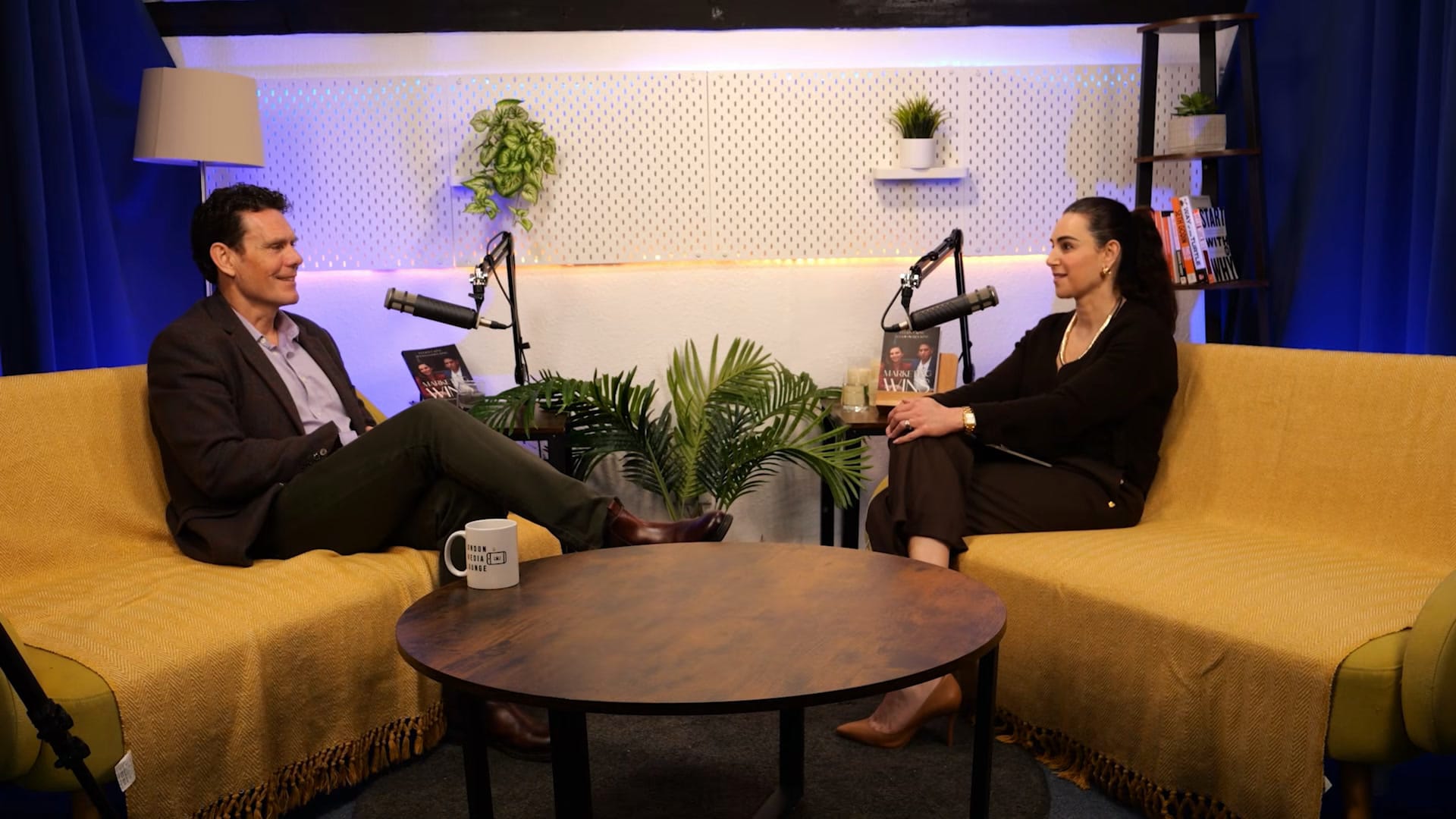
At thirteen, Steve Featherstone worked out that the British Army does most of its fighting at night, and that he could not turn his own bedroom light off. On this episode of BEYOND, the British Army veteran of forty years tells host Aleksandra King what he did about it.
Episode summary
He started walking through graveyards after dark on his paper round, over and over, until the fear turned into excitement. He enlisted at sixteen, served with the Corps of Royal Engineers and later as a Sergeant Major, and now swims and dives in pitch darkness because it brings him peace.
Aleksandra presses him on why the fear waiting inside the uniform was not bullets but standing up to speak, and on how four decades of being marked down in front of his peers turned criticism into something he calls liberating. Steve walks her through the protocol he runs several times a day: regulate the body with breathing before attempting any thinking, reframe the situation down to the single next thing that needs resolving, then reset and respond rather than react.
He argues that silence is strength, that purpose cannot be found but has to be chosen and shouldered, and that a leader who cannot name their people's motivators is administering rather than leading. The conversation turns personal when Aleksandra describes walking off The Apprentice and crying only once the cameras were off. He closes with an instruction rather than a summary: remove one comfort temporarily and see what it reveals.
“We have two fears: the fear that helps and the fear that doesn't.”– Steve Featherstone on preparedness and imprisonment
Key takeaways
- There are two fears. The fear of preparedness sharpens your focus and readies you for uncertainty. The fear that imprisons you loops through avoidance and rumination, and steals your freedom.
- Regulate, reframe, reset. Settle the body with breathing before attempting any thinking, cut the situation down to the single next thing that needs resolving, then respond rather than react.
- Silence is strength. Not every pressure needs an immediate answer.
- Purpose cannot be found, only chosen, and then actively shouldered.
- A leader who cannot name what motivates each of their people is administering, not leading.
- Remove one comfort temporarily and see what it reveals about your dependencies.
Key chapters
| Chapter | Timestamp |
|---|---|
| A thirteen-year-old with one ambition | 02:08 |
| The advert: the Army fights 80% of its battles at night | 03:16 |
| Walking through graveyards to burn out the fear | 05:06 |
| From fear to excitement, and learning to love the dark | 05:55 |
| Enlisting at 16, and the fear that was waiting inside the uniform | 09:26 |
| Why being marked down became liberating | 12:01 |
| Two kinds of fear: preparedness and imprisonment | 14:12 |
| Becoming a jet ski instructor to study people under stress | 17:11 |
| Regulate, reframe, reset | 22:42 |
| “Silence is strength” | 24:29 |
| Aleksandra on walking off The Apprentice | 27:11 |
| What leadership actually asks of you | 33:57 |
| Purpose is chosen, not found | 40:20 |
| Leaving the Army for “the wild west” | 42:36 |
| Building a morning out of discomfort | 43:03 |
| Luxury or necessity? | 50:45 |
| Remove one comfort and see what is revealed | 53:14 |
The guest
Steve Featherstone is a British Army veteran of forty years, now an executive coach and keynote speaker. He founded Ubiquitous Consulting and speaks for the intelligence-skills training company Spy Q.
- Website: ubiquitycoaching.com
- LinkedIn: LinkedIn
Where to listen
Transcript
Read the full episode transcript
Cold open
A trailer montage assembled from clips taken later in the episode, plus Steve's self-introduction. These lines legitimately appear again in the conversation below.
00:00:00 Aleksandra King: You are making yourself walk through graveyards at night.
00:00:04 Steve Featherstone: Yes.
00:00:04 Aleksandra King: So that you stop being scared of the darkness.
00:00:06 Steve Featherstone: Yes.
00:00:07 Aleksandra King: Are you serious?
00:00:08 Steve Featherstone: My name is Steve Featherstone. I have spent 40 years in the British Army. Those experiences that have been forged in fire I now share for life. I am a coach for Ubiquitous and a keynote speaker for Spy Q. In life, we're open to criticism and I welcome them. Going through life and not being challenged in the same environment, a little bit boring and a little bit lonely.
00:00:31 Aleksandra King: So you've been kind to yourself when you throw yourself into cold water.
00:00:34 Steve Featherstone: I don't want to get comfortable. I do everything that is going to cause discomfort because I know when I get back that actually I've achieved something that many others won't even consider.
00:00:44 Aleksandra King: Your three-step process to regaining control of yourself in the midst of utter chaos and stress.
00:00:52 Steve Featherstone: Regulate, reframe, reset.
00:00:54 Aleksandra King: I like it.
00:00:55 Steve Featherstone: If you doom scroll in the morning, stop that for 10, 15 minutes. Do something that benefits you. But as we get older, the body needs to be exercised. You need to put yourself through certain situations and environments to keep that resilience.
00:01:11 Aleksandra King: Well, I was in a high stress environment. I was on The Apprentice. I did the scene where I left publicly. You had to do it a couple of times to get her on camera. And when I left that scene, I then had a little cry, but I was like, you're not getting that on camera.
00:01:27 Steve Featherstone: If it wasn't on camera, just how much would it resonate with society if it was on camera?
00:01:34 Steve Featherstone: My name is Steve Featherstone. I have spent 40 years in the British Army. They're all engineers. Those experiences that have been forged in fire, I now share for life. I am a coach for Ubiquitous.
The conversation
00:01:48 Aleksandra King: Steve, welcome to Beyond the Boardroom. Right, what we're going to do today is we're going to dive into your story. I want you to tell it as if we are sitting together, audience included, that are watching us, around a campfire. Okay, tell us your story because it's wild.
00:02:08 Steve Featherstone: So my story starts at the very young age of 13 years old when I started to have a conscience and really understand about me as a person.
00:02:17 Aleksandra King: Okay.
00:02:18 Steve Featherstone: I always had this aspiration to join the military, and that was my desire. I had carved out a purpose and that was my intent.
00:02:28 Aleksandra King: Was someone in your family in the military?
00:02:29 Steve Featherstone: My dad.
00:02:30 Aleksandra King: Okay. So, yeah, you had a role model. Okay. So you want to join the military?
00:02:33 Steve Featherstone: Absolutely. And, you know, back in the 80s that was the done thing. Clearly mentally I was prepared for this, so I thought, and physically. But as I get older and time goes on I kind of realised I have a fear, and that fear was darkness. Now I didn't really equate darkness to joining the military, because why would I? I was enthusiastic. I wanted to go and do something and never really thought about anything else. I didn't do too well at school because I knew I was joining the army. But at the same time, as I'm starting to develop more and more understanding, the realisation hit me one day when I was watching TV and I saw an advert for the British Army and they do 80% of their fighting at night. And I kind of realised that, well, I'm scared of the dark. How's that going to work?
00:03:29 Aleksandra King: When you say you're scared of the dark, what is it? You can't turn your light off at night because you get scared? What is this?
00:03:34 Steve Featherstone: I couldn't turn the light off. I'd wanted to be home before the darkness closed in.
00:03:39 Aleksandra King: So really like a morbid fear at 13. And did your friends recognise this? Were they laughing and going, "Haha, are you scared of the dark? You getting that or what?"
00:03:48 Steve Featherstone: No, I hid that. There was a part of me that had this rebellious arrogance, you know, as invincible, as indestructible, but I knew deep down that there was something that made me very uneasy.
00:04:00 Aleksandra King: Did your parents find it unusual? Did they think, I mean they must have known?
00:04:04 Steve Featherstone: I don't think they knew. They just thought I was a very good kid being home on time before it got dark. But the purpose behind it is that I realised that I had to do something about it.
00:04:15 Aleksandra King: Okay. So you're literally living with this fear. You're trying to hide it and you're morbidly scared of the dark. What's in the dark that you're scared of?
00:04:25 Steve Featherstone: I think it was the fear of the unknown, the uncertainty. I constantly analysed it. There was paralysis. I wasn't too sure what options I had. I felt closed in. I felt suffocated. It was a part of my life I look back quite fondly. And it reminds me that if I put my mind to it and have the courage, I can break through. That darkness in itself was something that defined who I was. I wanted to join the military. I had such a desire that I knew I had to face my fear. Okay? And that fear came in, strangely enough, as walking through graveyards at night. I had to find the most scariest environment or situation just to get rid of.
00:05:17 Aleksandra King: So this is before you go into the army now, because you know that you want to go into the army, but you're terrified of darkness. So you are making yourself walk through graveyards at night.
00:05:29 Steve Featherstone: Yes.
00:05:29 Aleksandra King: So that you stop being scared of the darkness.
00:05:31 Steve Featherstone: Yes.
00:05:33 Aleksandra King: Are you serious?
00:05:34 Steve Featherstone: Very.
00:05:36 Aleksandra King: It is completely random.
00:05:37 Steve Featherstone: But I couldn't find any other way.
00:05:38 Aleksandra King: Well, it's more than random. It's madness. You're walking. I mean, even I'm morbidly scared of the dark, but I would be scared to walk through a graveyard. I think it's creepy.
00:05:47 Steve Featherstone: Yeah, it's creepy. But the fear, but then it became the excitement. I transitioned from fear to excitement, the excitement of the unknown. And then I started to become really comfortable with the darkness. I felt at ease. My kind of nervous system was now steady. I wasn't sprinting through the mind.
00:06:08 Aleksandra King: Well, you probably realised that the ghosts weren't going to get you when you walked through the graveyard. So you were okay. And you probably did that. Well, how many times did you walk through graveyards? Do you know?
00:06:16 Steve Featherstone: Countless times. So I had a paper round that required me to walk the long way around down to town or to walk through the graveyard. I always chose to walk around it, but on these occasions I knew I had to get over that fear and decided to walk through.
00:06:30 Aleksandra King: Oh. And what's going through your mind when you're going through that graveyard?
00:06:37 Steve Featherstone: I don't really know. I wanted to understand myself better. Why was I feeling the way I was feeling? What does that trigger? I'm 13, 14 years old, so I have no idea what I'm experiencing. I mean, TV doesn't help. The Daleks definitely didn't help. Vampires, Doctor Who, you know, hiding behind the couch, all of these things, they serve a purpose. And I look back quite fondly all the time. Remind myself where I was and where I came to. And if we fast forward today, I love diving in the dark, pitch black. I love the dark. It brings me peace.
00:07:13 Aleksandra King: Does it actually? I mean, that's, it does. It brings, you want to dive in the dark.
00:07:16 Steve Featherstone: I swim in the dark. I dive in the dark. It kind of, I think it reminds me of the difficulties I've had to where I got to and how I was able to achieve it. It brings me a sense of calm. It's relatable. You know, I was in the deepest darkest fear. But to get to where I wanted to get to, sat here today with you 40 years later, I always look back on the trials and tribulations of my life, which has carved out the path to success.
00:07:44 Aleksandra King: Okay. So you're doing the paper rounds, you're walking through graveyards, you've got this ambition of the army, then you get into the army. Is that fear still following you into the army?
00:07:57 Steve Featherstone: No. Completely severed. I actually embraced and loved the darkness and on exercise, and especially as a young lad at 16 years old, you know, you're camped under a basher, which is a sheet among the trees, the stillness, the darkness, the wind, you know, the complete isolation. I loved it and I knew at that time that I'd conquered a fear that most probably would have kept me or held me back on a different course of life.
00:08:29 Aleksandra King: Yeah. I mean, lots of people will be watching this and many would have been scared as children of the dark and, you know, kept their light on for a little bit longer, but it seems that you had even more of a fear. It was really a thing for you and it grew and grew and grew. So is the confrontation the thing that burnt your fear?
00:08:55 Steve Featherstone: I had a strong desire to follow my dream and that desire was to join the military. I didn't see any other option for me and that was most probably down to a blinkered view. But that was my passion. That was my drive. I had to get there. So knowing that at that age I had to do everything possible to make me successful to get there.
00:09:22 Aleksandra King: So, I mean, yeah, you had to overcome that and then you're in the army, and in the army did you meet other fears?
00:09:29 Steve Featherstone: Plenty. The fear of standing up and presenting to people, if you're doing lessons. I learned in the military that consequence is a very good motivator. I always viewed consequence as a negative. Consequence is a positive and a negative, and you're rewarded for what you do and you're also penalised for what you don't do. And the military taught me many different things about myself. The fear of failure. I didn't want to fail because it meant so much to me, but at the same time it allowed me time to grow. You know, confidence and growth can't coexist. And when I joined the military at 16 years old, my life was chaos. It was organised chaos. There was a structure in place. But internally, I was in complete turmoil. Why? Because I was learning something new. I was being stripped of my identity. My identity was being stripped in a way that benefited the military. I was no longer this.
00:10:33 Aleksandra King: They do that, don't they? You're a number then.
00:10:36 Steve Featherstone: Yeah. I call it the shoal of fish syndrome, in that everyone joins the military with a persona, with an identity.
00:10:43 Aleksandra King: Yes, of course.
00:10:44 Steve Featherstone: And we all operate very differently. Our values are maybe different, our education, our backgrounds. So we all come there different in many ways, eclectic sometimes, but at the same time you have to operate together as a team. You have to have those shared values, that shared mindset, that motivation. And I look back now and I say to myself, well now I get it. All of that chaos was serving a purpose. It was redefining me. It was bringing structure, actually. It was making me competent in many ways and I grew up very quickly when I was going through my training.
00:11:21 Aleksandra King: Okay. So you're growing up and you're facing fears and the fears, it's strange because I was expecting you to say, you know, with the army that, you know, your fear of getting shot at or your fear of being killed or your fear of all the stuff, and you're going the fear of standing up in front of people and speaking.
00:11:38 Steve Featherstone: That's the fear because there's a fear of rejection, there's a fear of judgment. And the military is great because they do exactly that. You know, you will give a lesson and then they'll mark you down and say, you know, the bad things, the good things and everything else. But you learn from that. That is a discomfort. That's the growth. And I learned from an early age that I have to be more accepting of criticism.
00:12:07 Aleksandra King: Yeah.
00:12:08 Steve Featherstone: And I find that liberating because no one's perfect as much as they think they are. But I found that being corrected, being reminded that there's room for improvement, helped me maintain my course of success.
00:12:26 Aleksandra King: It obviously means a lot to you because when you came in this morning, one of the questions that you asked me before we started the podcast was, "How do I handle trolling?" And I'm lucky in the sense I don't get much of it. Everyone gets some of it. I don't get like lots, but I do get it. And it was interesting that you found it interesting. You know, why did you want to ask me that?
00:12:52 Steve Featherstone: In life, especially my time in the military, 40 years, you know, people would say, well, you're indoctrinated. I think it's a structured environment and we're open to criticism. You know, we're open to other people's opinions and views and I welcome them because actually I love to hear other people's point of view for whatever reason. But that's not what I'm really interested in. What I'm really interested in is why do they have it? What is below the surface? What is their values? What is their knowledge? You know, if I allow their problem to maybe be a me problem, then it's a me problem. So I'm not particularly interested in what's being said. It's more about why are they saying it?
00:13:39 Aleksandra King: I mean, if it's of relevance, of course, if relevance, but even so.
00:13:42 Steve Featherstone: What prompts someone to say the things that they do? They may be going through a very difficult time. It may resonate or chime to a particular event that makes them feel as if they don't feel worthy enough and they have to say something to validate themselves. You know, I love people and I've learned in my time how people can behave differently in different events and scenarios and situations.
00:14:08 Aleksandra King: Okay. How is that then?
00:14:10 Steve Featherstone: Well, for example, we spoke about fear.
00:14:14 Aleksandra King: Yeah.
00:14:15 Steve Featherstone: We have two fears, you know, we have the fear that helps and the fear that doesn't. Fear of preparedness. We're prepared. It sharpens our focus. It sharpens our perspective. Actually, it allows us to prepare ourselves for uncertainty and potentially the unavoidable. As an example, when we deploy on operations in the military, what are we to expect? You know, cognitively, behaviourally, physiologically, psychologically, there's so many different things to think about and that may impact how we behave. But we're prepared. We're trained. You're trained in a way that protects you. It gives you resilience physically and mentally. To go on operations, you'd most probably start training 12 to 6 months before you deploy. Whereas the fear that kind of imprisons us is the fear that puts us in this loop of destruction, avoidance, imagination, rumination. It steals our freedom.
00:15:27 Aleksandra King: Yeah. The fear that makes you sit in your own head paralysed so you're not actually doing what you need to be doing because you're too scared of doing what you need to be doing.
00:15:35 Steve Featherstone: Absolutely. Because you're having fear.
00:15:37 Aleksandra King: Yeah.
00:15:38 Steve Featherstone: But being prepared is a wonderful, liberating thing. Eliud Kipchoge, the marathon runner, always says that it gives you freedom.
00:15:46 Aleksandra King: You know, if you're prepared and you're disciplined and you're organised, with that comes a level, the consequence is that you actually lead a more relaxing life. You're free to live the life that you want to live because you're not living in disorder and chaos and the jail of the negative fear. That is what you're saying basically. And that is true, you know. For me, I love the preparation, you know, for a podcast and you do your research and you get the questions and you have the pre-podcast call and all that sort of thing, because then there's a structure, a format, a system that keeps everything organised and on schedule and flowing and professional and all that kind of thing. But then it's also nice to be spontaneous, but I would prefer to leave the spontaneous things for a spontaneous holiday or, you know, surprise me. Where should we, surprise me? You know, but never really for work stuff. I don't particularly love surprises, but I'm wondering if that's also not good because you need to embrace the unpredictable. But that's also what you're saying with darkness. You have to embrace the unpredictable.
00:16:51 Steve Featherstone: Change, challenge is what makes us who we are.
00:16:54 Aleksandra King: Yeah.
00:16:54 Steve Featherstone: Going through life and not being challenged, not embracing difference or recognising that you are different to other people in the same environment, it gets a little bit boring and a little bit lonely. I love the idea of meeting new people in new environments. I qualified as a jet ski instructor about a year and a half ago.
00:17:18 Aleksandra King: Okay.
00:17:19 Steve Featherstone: Everyone's questioning me, why did I do that? Because having been in the military for 20 or so to 40 years even, I understood the framework. I understood the DNA of individuals in the military, but I'm now out of the military and I didn't understand the civilians. I could walk into a pub and sit down and have a conversation, but that's just a really small snapshot of civilians outside of the military. So I decided that I needed to do something different. I needed to learn about people's behaviours in high stress environments or high octane events. And so I kind of got myself qualified and then became a jet ski instructor for Jurassic Jet Skis. In the most amazing time. But I learned more, it was more about research for me and more about people and their behaviours.
00:18:10 Aleksandra King: But that's wild because you're with people in the army setting in a very stressful setting. And I still come back to the fact I still can't believe that you'd be more afraid of standing up in public than you are of bullets and all these things. But you were in high stress environments with people. So are you saying that in the army people are, because they're so stripped of their identities, that they lose something there and that therefore civilians, and hello civilian, civilian.
00:18:42 Steve Featherstone: So civilians, very much love my identity actually as a civilian.
00:18:47 Aleksandra King: But are you saying that there's a fundamental difference there in terms of personality and that kind of thing?
00:18:54 Steve Featherstone: So, I'm very fond of the military. The humour that it is, the complete different language that's been muted. I can go into a bar and pretty much within about, you know, five or 10 minutes if someone's talking about a particular thing or using phrases or words, I know they're ex-military and they could be there with a bushy beard and, you know, completely just enjoying life in their own way. There's that brother, sisterhood that's always present and I feel it and I think it's fantastic. When I left the military I felt as if I left a part of it, and you'll see it with so many veterans where they always come together, and there's various groups that support each other in many different ways. I always felt that I wanted to be more understanding of civilians as well. You know, I understood the military. I understand what I needed to do when I left the military, but also I wanted to fit in more, so understand others. And that emotional intelligence transcends not just in the military, but also everywhere else. And I use jet ski as an example. I met the most amazing people. They were in an extreme stressful situation when they're cutting across the south-west coast on a jet ski at 50 miles an hour and you could see the chaos in their eyes, you know, the fear. And that was an opportunity for me to give that reassurance, to give stability and just say, you know, give them some coaching trips to enjoy it.
00:20:29 Aleksandra King: So let's step into that. So, and obviously you have been in a lot of high stress situations and things like that. So what do you say to someone in the middle of a high stress situation to get them through it?
00:20:45 Steve Featherstone: Breathing is power. Regulate. Don't try and think your mind through into calm. The body needs to relax. So it's breathing, relax. The tension in the body has to be released. You know, it's dropping the shoulders, taking deep breaths. It's reframing what you're experiencing and then rather than reacting, we respond. That's what I call the reset. So it's regulate, reframe, and reset. And I go through this pretty much several times a day because there's situations that I've not experienced in the military. And on the face of it, they could be very trivial, but it affects my values and my beliefs. And there's a conflict of emotions, a conflict of emotions and values. I'm like, okay, I don't want to react. So I prepare myself, breathing. I always sigh. Sigh is a way of me releasing that kind of negative energy and then using that to find a position where I feel comfortable and I'm calm.
00:21:54 Aleksandra King: When you're in the midst of chaotic stress and anxiety, thinking about your body is not a natural thing to do because your mind is racing and it is thinking about the issue and it's very, very psychological. So what you're saying is when you know that you're in the midst of all that upheaval, chaos, it's actually get out of your head and go into your physical body, regulating your breathing. So that's step one. Okay.
00:22:26 Steve Featherstone: Yep.
00:22:27 Aleksandra King: How long do you do that for?
00:22:28 Steve Featherstone: As long as it takes.
00:22:29 Aleksandra King: As long as it takes you, very long time with me.
00:22:33 Steve Featherstone: Well, how long have you got? It's fighting biology with biology.
00:22:36 Aleksandra King: Gosh. Yeah. So, talk us through your three-step process to regaining control of yourself in the midst of utter chaos and stress. Let's go.
00:22:50 Steve Featherstone: Okay. So, in chaos and stress, first of all, I have to control myself. So, I breathe. I find that breathing process. And there's a variety of ways of doing it. Mine's simple. Inhale, hold, and exhale, hold, and so on and so forth. And I do that for about a minute. I then look at the situation or the event to reframe it. You know, I'm not at threat. I may be in threat mode, fight or flight, but actually right now I'm just processing what's going on and focus on the first thing that needs to be resolved rather than the whole of the situation. I then find a moment of silence. I call it a step back. Look at the bigger picture. Am I safe? I am safe. I haven't reacted. I can now respond. And respond maybe in silence, respond maybe just to step away from a situation that I can no longer control, but I can control myself. And that's what's really important. Controlling yourself and not exacerbating the situation more than what it should be or what it is.
00:23:52 Aleksandra King: So relax, relax, reframe, regulate, reframe, reset.
00:23:57 Steve Featherstone: Regulate, reframe, reset. Okay? I work in threes and the reason being is that there's lots of mnemonics and all sorts out there that people use. Well, I'm a simple man. So, I try to make things as easy as possible. Regulate, reframe, reset.
00:24:14 Aleksandra King: I like it. Regulate, reframe, reset. Okay. Regulate, reframe, and reset. So, in the reset, you respond. Really?
00:24:24 Steve Featherstone: I respond. And that response could be silence. Silence is strength. It really is a powerful place to be. If you do not react in a way that exacerbates the situation, but can stand there accepting what's gone on, what's happening.
00:24:41 Aleksandra King: I love reacting, though.
00:24:43 Steve Featherstone: Yeah, there's a consequence.
00:24:46 Aleksandra King: I'm an action person.
00:24:46 Steve Featherstone: Well, so am I.
00:24:47 Aleksandra King: I love action.
00:24:48 Steve Featherstone: You definitely are.
00:24:49 Aleksandra King: I love action. I'm all about movement. I'm all about doing things.
00:24:52 Steve Featherstone: Action figure.
00:24:53 Aleksandra King: Yeah. But there's parts of the things that it's hard to be silent.
00:24:57 Steve Featherstone: Oh, but you know, go back to jet skiing. The amount of scenarios and events where actually I could have got really upset because it's about safety as well. But no, I was doing the three Rs.
00:25:12 Aleksandra King: Gosh, regulating, reframing, and resetting. So, are you seriously, so you really in these situations, you are really doing these three things and you're actively managing yourself. You're actively doing it always because people are probably going to watch this and they're not going to do it. That's the thing, they're not going to actively do it. Why do you actively do it? How do you remember to actively do it?
00:25:32 Steve Featherstone: I've been doing it continuously. I've been doing it for many a year. I went through a really acrimonious divorce, which I can touch on later, but I do it because it's self-preservation. Stress, you know, we know what stress does. Chronic stress, it's a killer. It suppresses the immune system. It can bring on heart disease. It accelerates ageing. It's all the nasty things in life. It's a nasty thing and I want to live forever. So, you know, I realise the importance of it. I tell myself in a situation of high stress that is a consequence. And that consequence is I have to control me. I can't control the environment. I can't control the situation. But I have to control me. But also, I have to control those around me. If they see that I'm calm and collected, let's use jet ski as an example, then everyone else will be calm and collected. If I go into a state of panic when my hair is on fire, invariably everybody will see that, well, if Steve's panicking, we need to panic. So, you've got to remain calm. But this hasn't happened, you know, when I was in my teens and the 20s. It's developed. I spoke before about all of my life experiences forged through fire. I have gone through, you know, highs and lows. I've been to some really dark places, my own experiences, which have encouraged me to use those experiences and share those life experiences and what I do now.
00:27:07 Aleksandra King: As you were talking I remembered a scenario where, well, I was in a high stress environment, what I would call high, not guns, not anything. And I'm actually not scared to speak in public. I actually don't have that fear, thankfully. However, I was on The Apprentice and when I decided to walk off, I had already reached a point. I was under stress. I was feeling overwhelmed. The whole thing was just a disaster in my own head. I was in that situation, you know, that you're talking about, in that high stress moment. And, you know, I did the scene where I left, you know, publicly. You had to do it a couple of times, they get her on camera. And when I left that scene, everyone, the cameras, all of it, I then had a little cry, which lasted a long time, surprisingly. I'm not really a crier. I can count on one hand the amount of times I've cried in my life. So, but I cried, you know, and I was in the moment, I was controlling myself. But after the moment where I finally had myself to myself, and I'm also embarrassed of admitting this, that I cried and I had that moment, but I'm going to say it because I then let go and I felt actually really good letting go and I felt good having a little cry. Is that response?
00:28:27 Steve Featherstone: Yeah. You've carried that stress, that internal, the weight within inside, it's like a pressure cooker. You've had no release. And throughout what you've just described, that release was then telling yourself that it's finished now. I can be kind to myself. And being kind is great. Crying is not a bad thing. Crying is a great thing. It's showing emotion. It's actually being in touch with your feelings. Emotional intelligence is huge.
00:28:55 Aleksandra King: Yeah. But I was like, you're not getting that on camera. You're not getting that. You're not getting that moment. So that was for me.
00:29:03 Steve Featherstone: So a question then. If it wasn't on camera, just how much would it resonate with society if it was on camera?
00:29:12 Aleksandra King: I didn't want to do that in front of everyone. This is the, you know, when you were saying about the group, you have to remember that it wasn't just me that was under that. All of the candidates were under serious pressure. And some of them were having probably even worse than me time. So if I had had a huge meltdown and cried in front of all of them, it would have made the whole thing worse for everyone. So in that moment, I was also managing the other people that I grew fond of. There were certain people in there I really till today I have good relationship with and I didn't want that. I didn't want it to be a massive thing. I just wanted to leave and I just wanted to evaporate from the scene and I didn't want it to be a big, you know, I wanted to have that, that's a private moment for me and it would have made it worse.
00:30:07 Steve Featherstone: So much worse. You think it would have made it worse?
00:30:09 Aleksandra King: So much worse. Yeah. Well, for the people that were still stuck there. I mean, it was already bad enough that I'm walking because I'm going into freedom.
00:30:17 Steve Featherstone: Yeah.
00:30:17 Aleksandra King: And they're still in jail in my opinion. So, it's already bad enough, you know, and I'm letting them down and all that kind of thing as well. You know, they're losing a member of a team.
00:30:26 Steve Featherstone: Did they tell you that?
00:30:27 Aleksandra King: No, but it's, you know, we are.
00:30:30 Steve Featherstone: And it's great what you're describing because we interpret life very differently, you know, and we're our own worst critics. And as you described that, I was letting the team down, but did you ask them that?
00:30:41 Aleksandra King: Well, they're probably, in a way I was doing them a favour because it's one less person they have to worry about in the competition. So in a way. But, you know, there is a task, it's a team thing, so obviously they have one person less. I was pretty good with details and things like that, so I had my value that I added. But yeah, but then again I'm also competition, so.
00:31:01 Steve Featherstone: And it sounds like, you know, the strength there was about showing the world that you wasn't bothered, you know, you could hold it together. But actually strength's very different, you know. Strength's about processing it and continuing to function. And I use the army as an example, or the military, where we go on operations, soldiers, girls and boys, we do shed tears for a variety of reasons.
00:31:27 Aleksandra King: You did?
00:31:28 Steve Featherstone: Yeah. It's not about holding that pressure within. It's about sharing the moment.
00:31:35 Aleksandra King: Wow. Okay. Because also I went, I was in boarding school and something happened. It was a really bad moment. You know, I don't want to say because obviously people know me and the person probably wouldn't appreciate me repeating, but something bad happened and it resulted in us, the friendship group, there were five of us crying and being really sad, and we were told at that time, we were taken into a room and said, listen, if you're going to cry you're going to do it here behind closed doors, cry as much as you want, but when you leave this room you want not to cry anymore and you have to pull yourself towards yourself, get a grip and then you can come out. And the door was shut. That is a true story. So we had to sit there, cry as much as possible so that when we exited, we were all, yeah.
00:32:29 Steve Featherstone: You was given a moment. It's that time to reflect.
00:32:32 Aleksandra King: Yes.
00:32:33 Steve Featherstone: And allow those feelings, those emotions to bubble up and then be expressed.
00:32:37 Aleksandra King: Yes.
00:32:37 Steve Featherstone: And it has to be. If you don't express your emotions and you hold them in, it's like a pressure cooker. At some point, it'll erode and it will get the better of you.
00:32:48 Aleksandra King: Yeah. I didn't at the time understand why we were left there to cry. But looking back at it now and also what happened with The Apprentice, I do think that coming out with all of those displays of emotion, I think in that setting with everyone there and it's boarding school and it's a sensitive situation, it would have made things worse. If you've got someone, it's like you were saying, someone panicking or someone having, you know, the morale of the group is then affected a lot and not in the most positive way. So actually like you release but then release in a controlled manner. Yeah. Is more what we're talking about, right?
00:33:27 Steve Featherstone: Yeah. If you want to retain your position in society or an organisation then it may be that you have to do that in private, you know, amongst other people if they choose to share that moment with you. But at the same time, you know, you also have a position that you want to retain. In that position maybe, you know, if I'm seen to be showing weakness, how will they think of me?
00:33:49 Aleksandra King: Yeah. Yeah, that's it.
00:33:50 Steve Featherstone: I, you know, leadership, leadership's been ingrained in me over the 40 years.
00:33:55 Aleksandra King: Okay. Do you think you're a good leader?
00:33:58 Steve Featherstone: I'd like to think I am.
00:33:59 Aleksandra King: Why?
00:34:00 Steve Featherstone: My leadership is not just measured on what people think of me. It's also written in your reports and how you are. And I always remember one of my commanding officers: "Featherstone demonstrates an amazing leadership, novel but effective." And I kind of questioned that. What is that? And what it is, it's about being relatable. It's about building relationships with your soldiers. It's about understanding their needs above your own. It's about inspiring, making the right decisions, even if it's inconvenient or it goes unseen. But leadership is about being present. And throughout my time, I have seen good leaders and bad leaders. And I've learned from both. I've learned not to do what I disagree with, but also emulate what I see. And over the 40 years, I'm actually quite blessed that in that filtering process over time, you get to learn a lot, not just about yourself, but other people.
00:34:59 Aleksandra King: Okay, two questions in that. The first one is did you care about your soldiers? And when I say care about them, I mean, did you really care about them? And the second one is what does a bad leader look like really?
00:35:13 Steve Featherstone: So leadership for me, a good leader is about caring, you know, it's about recognising and understanding, but also knowing your soldiers. Not just know their names, what are their interests, what are their passions, what are their motivators. Not the leadership that goes unnoticed and we just do it because we're seen to be doing it.
00:35:34 Aleksandra King: Yeah.
00:35:37 Steve Featherstone: The bad leadership is when decisions aren't made or they can't be made. You know, there's poor decision making, the reluctance or hesitation of making decisions because they don't want regrets. They don't want to be judged. They just want to make sure that they're doing the right thing for themselves to better their position as they go through that.
00:36:01 Aleksandra King: That's a horrible, yeah. It's a selfish sort of.
00:36:04 Steve Featherstone: It is. Yeah. But there's also, you have to understand their motivators. You know, it may be that they've only got a limited time before they get promoted. It may be there's something else going on under the waterline that we don't get to see. You know, what is it, their values, their attitudes? There may be something shaping the reason why they're behaving and what they're doing. And that's what I find fascinating. When I see an output, an action, someone says or does something, I'm more intrigued. Why are they doing it? What is the driver behind it?
00:36:36 Aleksandra King: Well, a leader is travelling. He's moving with his group. It becomes one large thing that goes, it's not you on your by yourself. It's you with everyone. It's like a baggage. You're together. You form a creature almost that works together.
00:36:50 Steve Featherstone: Yeah. I wouldn't use baggage. I'd say responsibility and accountability. Yeah. Leadership become quite lonely. I remember being a Sergeant Major and it is a lonely place because you know you can't have a bias. You've got to make sure that you're impartial. You've got to treat everyone fairly. You know, if you kind of friend a particular organisation or, you know, a group of people, then the other people feel a little bit, you know, left out where you've got the favouritism of the Sergeant Major. But I learned all this as I kind of went through, you know, my leadership and it continues to evolve. It will always evolve. Society changes. The army is a reflection of society. The leadership that I was accustomed to in the 1980s, or 85 when I joined, is very much different to the leadership now.
00:37:38 Aleksandra King: How?
00:37:39 Steve Featherstone: Well, society has changed. We have created, there's a different culture. Intelligent people. They know right from wrong. They're more informed. They know so much more about their rights and what they shouldn't be doing or what they can be doing. I'm not saying that when I was doing it, it was toxic, it was really bad. But we didn't have the internet. You know, we were told to go and do something. We did that as long as it was ethical.
00:38:11 Aleksandra King: So leadership's changed. And what about you as an individual? So a leader, a person, a member of the army, you know, you feel you're stripped of your identity. But were you confident then? Like really, really confident in yourself? And are you confident now? Has it changed? When I left the military, in the military, were you confident? And now are you confident? And is that confidence different, like actually confident?
00:38:42 Steve Featherstone: So my confidence has always evolved. You know, there's been situations where I haven't been confident because I'm not entirely sure what's expected of me. But I have to remind myself it's about me. Don't control the situation, control yourself. And the more I've done this over the years, I've become to learn about every situation demands a different Steve. Every scenario demands a different Steve and I have to be adaptable. But to be adaptable, I have to use my three Rs. I have to regulate. I have to reframe. And I have to reset. I have to think about everything in advance. If sometimes right here and right now, that innate intelligence. But as I am developing, as I am learning, I'm always evolving. I have this thirst for learning. And now being a coach, I want to share that, you know. So, it's kind of a life coach, but it's not a life coach in terms of, it's not everything. It's about self-awareness. It's orientation and alignment. It's finding your centre. You know, we get lost in distractions. We get lost in the busy world. And sometimes we lose ourselves. And what I've become really successful at doing is allowing people to find their way back by spending time with them, going through a kind of a journey of adventure, exploring where they are, how did they get there, what does it mean to them, where do they want to get to, and using those experiences of past to help them find a way to where they need to get to now.
00:40:19 Aleksandra King: Are you helping them find their purpose?
00:40:21 Steve Featherstone: Purpose is something that can't be found. It has to be chosen. You have to shoulder purpose. And that purpose is about redefining your behaviour, your values and motivation. Purpose is a responsibility and you get held to account. We step away from purpose, we lose drive, we tend to just start to stagnate. And it's not about that. Purpose is what do you want? What is the intended outcome? What are you working towards?
00:40:56 Aleksandra King: I wish that when they interviewed politicians, you know, instead of asking them about, you know, a very specific thing about, you know, an action they've done or whatever, if they just, you know, asked, you know, what's your value on this? What do you really value here? What's important? What do you really care about? What do you treasure? What do you admire? What do you not admire? You know, those sort of values, morals more than specifics that are, it's able to hide those.
00:41:23 Steve Featherstone: Well, that goes back to the military. You know, you get those values, you know, it's courage, discipline, respect for others, integrity, loyalty, and selfless commitment. So, those values are shared within the military. And why is that? Because we're all working towards a given purpose. So those values become the cornerstones of how we think and how we operate.
00:41:50 Aleksandra King: I love the military. I admire the values of the military. I think how selfless that is to go in and you're putting yourself in harm's way to protect others. And then you as well as a leader, you've got these soldiers and they're relying on you and you've got to guide them and they are going to also be scared. They're going to have their fears and you've got to encourage them and help them. But you're working towards this greater good, to protection of civilians, you know, like like me. And I just think it's incredible. And I wish the military had more respect in, especially in the United Kingdom. It does in the US.
00:42:27 Steve Featherstone: But yeah, I think, you know, myself, the military has been great to me. You know, it's given me 40 years. It has carved out who I am. Leaving the military and entering what I call the wild west, civilian street.
00:42:44 Aleksandra King: Yeah, it is the wild west.
00:42:45 Steve Featherstone: Was a little bit different.
00:42:46 Aleksandra King: Welcome to the wild west.
00:42:48 Steve Featherstone: It was liberating. So much free time. There was no structure in my mind, if I did what I wanted to do. No one was going to impose any standards on me.
00:43:01 Aleksandra King: Yeah.
00:43:01 Steve Featherstone: But it became quite uncomfortable given who I am and what I believe in. And I had to carve out a new structure. I have to make sure my routine gives me some discomfort. You know, in the morning it is wake up and the body does the work and the mind will wake up. Whatever the body does the mind will follow. I have a routine in the morning.
00:43:24 Aleksandra King: I love that.
00:43:25 Steve Featherstone: I go for a cold water swim, you know, and I do all the things right for the body. I make myself bulletproof in the morning and by the time my mind wakes up, my body is ready to go and I feel fulfilled. I feel ready. If I take that away, two or three days, I get grumpy because I know that I'm not doing what is right for me. I'm not being kind to myself. Self-love, positive talk, it all adds and means so much.
00:43:54 Aleksandra King: So, you're being kind to yourself when you throw yourself into cold water. Is that right?
00:43:58 Steve Featherstone: I need discomfort. My body needs discomfort. I need a challenge, you know. I don't want to get comfortable.
00:44:03 Aleksandra King: Can't you just go running?
00:44:05 Steve Featherstone: I do running as well. I do cycling. I do it in the rain. I do things. I do everything that is going to cause discomfort because I know when I get back that actually I've achieved something that many others won't even consider.
00:44:19 Aleksandra King: Do you know what I find? I go to physio. I had plantar fasciitis and the physio did, well does, we're, it's ongoing, shockwave therapy, basically like electrocuting your foot. But in the most sick and weird way it's one of the most relaxing and simultaneously unpleasant things you can do because it's shocking you, which is awful. I mean, it's up there with childbirth, let me tell you, when I go over bone. It's like, ah, but when it stops, the relief. Yeah. It's almost like you're melting. It's like you melt into that chair and the all problems are gone. You forget.
00:45:04 Steve Featherstone: Well, there you go. Whatever problem you had. My morning routine is exactly that. It's the endorphins. It's the, I have done something for me.
00:45:13 Aleksandra King: So, in the moment you hate it.
00:45:15 Steve Featherstone: I hate it.
00:45:16 Aleksandra King: Afterwards, despise it. Yeah, it's awful.
00:45:19 Steve Featherstone: No, I know. I reckon my body's, well, my body is on autopilot. I get out of bed. I do what I need to do, my exercises. I put my running shoes on and I go for a run.
00:45:29 Aleksandra King: How long do you run?
00:45:30 Steve Featherstone: So 10ks. And then I come back and then I go for a dip in the sea. Or it may be that I decide to go for a dip in the sea and then go for a 5k run. I mix it up all the time so that it's uncomfortable. And I hate going in the sea when it's like nine degrees, but I know that I stop that I will lose the resilience and it'll be twice as hard. So, yeah.
00:45:51 Aleksandra King: Yeah. Here, here.
00:45:52 Steve Featherstone: We speak about, you know, what does comfort do? Well, if you have comfort in your life, eventually it will get the better of you. And I know if I stop doing whatever I'm doing, I will start to lose the resilience and it'll be so much harder to get in there. Then I have a life of regrets. Why don't I pursue it? Why don't I continue? So, it does take discipline.
00:46:17 Aleksandra King: Oh, you know, this reminds me of this, there's this a story. I don't know if it's a Russian story or, I don't know, but anyway, there's a story of, and maybe you might know it actually, of a guy who's trying to make it up a hill to the top. And the rule is that you will make it up to the hill if you don't look at these things that tempt you along the way, because if you look at them, you'll turn into stone and become one of them on this hill. So if you look at, there's all these stone figures, statues. So the guy would have to try and go up this hill without being distracted at all. And in this I would put the comfort, oh just snooze that alarm clock. You don't need to go to work now. Go later. Why don't you take the day off? Or don't go running. Come on, it's raining. It's hailing. Look, there's ice. Don't do it. Or don't go in the cold water. It's, you know, just don't do it. Not today. You know, you might have an health issue. You know, you might, all those things, those little whispers of temptation back into comfort. And it is, it's quite sinister because it's so pulling. It's so inviting. It's like, look at that bed. It's comfy.
00:47:31 Steve Featherstone: But it's not serving you and you'll just stagnate on that hill. And that's my fear, stagnation. But also looking ahead, we take things for granted. We really do. Mobility, you know, walking up and down steps we take for granted. But as we get older, the body needs to be exercised. You need to challenge yourself. You need to put yourself through certain situations and environments to keep that resilience, to keep the motivation, the sharp mind. Where I live, it's on a hill. They call it Heartbreak Hill for a reason.
00:48:11 Aleksandra King: Heartbreak Hill.
00:48:12 Steve Featherstone: But I'm surrounded by, you know, mature people in their 70s and 90s and 80s and they're like mountain goats. And I'm one of those that I sit back and I observe. I love watching people. I love listening and understanding them. And I always remember speaking to my neighbour and, you know, she's been there 30, 40 years and she always laughs and jokes. It will kill me one day, but she's up and down like a mountain goat. Awesome. And when I see that I commend their commitment for doing it. They could easily jump in the car and drive up and down, but they're doing it for maintenance. Maintenance of the body. Fabulous. I will always walk everywhere in Weymouth where I live. I will never drive because I love the idea of using what is being given to us, but you have to maintain it before you make the mistake of not using it and it fails you.
00:49:04 Aleksandra King: Do you eat well?
00:49:05 Steve Featherstone: I eat well.
00:49:06 Aleksandra King: How so?
00:49:09 Steve Featherstone: I suppose in many ways I've kind of drawn myself into eating well. You know, mornings bananas. I love coffee. I have a coffee. That's my stimuli.
00:49:18 Aleksandra King: Do you have proper coffee or instant coffee?
00:49:20 Steve Featherstone: Oh it depends what's on offer. I just have any coffee.
00:49:23 Aleksandra King: Any coffee. Give me a coffee. I'm really bad at coffee.
00:49:25 Steve Featherstone: But I've recognised that I need to start drawing down with coffee a little bit. That's one of my comforts, but it doesn't necessarily mean that I can't stop doing it. I flip between different types of herbal tea. I like to try different things. I get inspiration from social media. You know, boiled eggs and avocado on sourdough. Fantastic.
00:49:44 Aleksandra King: Hungry now.
00:49:46 Steve Featherstone: I'm a very healthy eater. I love spinach. I love salmon. Steak.
00:49:50 Aleksandra King: Steak.
00:49:51 Steve Featherstone: I don't necessarily, I'm going off steak. I'm going off pork and all those things.
00:49:55 Aleksandra King: Love steak so much.
00:49:56 Steve Featherstone: I go through phases, but I'm definitely someone that lasagna.
00:50:01 Aleksandra King: Lasagna.
00:50:03 Steve Featherstone: Love lasagna. Spaghetti Bolognese I find messy, so I tend to stay away from that.
00:50:07 Aleksandra King: What's your favourite food in the whole world? Mine, it would be.
00:50:13 Steve Featherstone: Salmon, spinach, and potato.
00:50:17 Aleksandra King: God, you are really healthy. Yeah. Really trained yourself.
00:50:21 Steve Featherstone: It has to have a crispy skin though and I've learned the skill of that cold pan. It's the cold pan to get the crispy skin.
00:50:28 Aleksandra King: Start with, you have, I can just see you as someone going around and perfecting every stage, every single thing. I bet you it's all, yeah. I bet you it's all exactly as it should be.
00:50:44 Steve Featherstone: Which absolutely, there's a reason why. I recognised in my life that there was so many spinning plates and I wasn't giving my full attention and plates started to drop. What did it mean to me? I was trying to do too much and not doing what's just and focus on where the value is. What was a luxury, what was a necessity in my life? And I use that as a caveat for everything. Steve, is it a luxury or is it a necessity? It's a luxury. Okay, I can do without and I move on. And I start to realise that if I focus on the things that really mean something to me, that's what I want to learn more. This year, I've promised myself that I'll do more. I'll do some ultramarathons. I love the idea. I'm getting older. I'm not as fast, but I love the idea of going far. I did the Cateran Yomp last year and I found it fascinating. You know, 54 miles, isolation, you're by yourself and the freedom, you know, it's quite invigorating just to be there doing something and then putting your body, getting to know your body. I'd never done more than 24 miles before and I really enjoyed it. I started to explore new me.
00:51:53 Aleksandra King: What did it mean?
00:51:54 Steve Featherstone: Well, I'll tell you what, I got cramp at 25 miles, so I need a hydration plan. But I was constantly learning about things. Whereas before, when in my 20s and 30s and 40s, I just took it all for granted. Took it in my stride. So now I focus my energy to really understand what brings quality.
00:52:11 Aleksandra King: Quality. I mean there are some luxuries that bring quality. I think a good mattress is one of those.
00:52:17 Steve Featherstone: Yeah, I agree on that.
00:52:18 Aleksandra King: A really nice, you know, there are some that can benefit your life and some that are completely unnecessary like overly branded stuff that's just like.
00:52:27 Steve Featherstone: Yeah, branded for no reason.
00:52:29 Aleksandra King: Okay. So what should people take from you from this podcast that will meaningfully change their lives? We've spoken about a lot of things, you know, burning through fear and having, you know, the organised life and putting yourself in, you know, structure your life accordingly and putting yourself in uncomfortable situations so that you can grow and maintain, and you know, lots of things. But what do you think ideally you would want people to take from this?
00:53:03 Steve Featherstone: If there's a strapline, I would say have the courage and the curiosity to change. And what I mean by that is we have comfort in our lives all the time. Take away one part of comfort temporarily and to see what's revealed from that. So if you doom scroll in the morning, you know, stop that for 10, 15 minutes. Do something that benefits you. Do a plank. Move the body.
00:53:34 Aleksandra King: Yeah, move the body. Dance.
00:53:36 Steve Featherstone: Now, I'm a woeful dancer, by the way, but I was going through a phase where I was waking up and I just felt so kind of depressed and wasn't going anywhere through obviously the divorce. So, I reminded myself, let's put some music on, upbeat music, dance badly, but realising the body means so much.
00:53:58 Aleksandra King: So remove a comfort, see what's revealed and then replace it with what?
00:54:06 Steve Featherstone: Whatever you find, whatever's revealed to you. If we start deconstructing our lives to work out, actually remember what Steve said, is it a luxury or is it a necessity, and weigh it up. If I do these exercises in the morning, what is the value? Well, the value is I get stronger muscles. I feel confident. I feel more stable. My nervous system is more stable. This confidence radiates within, also radiates out. It gives me a glow. But what's the threat of not doing it? Well, comfort starts to creep in. Daily tasks become stressful. Stress is one of those that we need to avoid. So, make those life changes that benefit you. Because we have to self-love and it's also positive talk. You can do this. You don't need the validation from everyone else. Clearly supportive, but you do what's right for you and that's what's really important. When I do everything that is for me because I then can give more to so many more people.
00:55:15 Aleksandra King: Steve, it's been an absolute pleasure. Thank you. And I'm definitely going to remove a couple of comforts from my life and see what's revealed.
00:55:24 Steve Featherstone: Excellent. We shall see.
00:55:26 Aleksandra King: But thank you so much.
00:55:27 Steve Featherstone: Thank you.
Follow Aleksandra
Business and collaborations: aleksandraking.com | aleksandra@aleksandraking.com
The views expressed by guests are their own and do not reflect those of Aleksandra, the podcast, or its producers. This podcast is for entertainment only.